Honestly, navigating relationships, handling stress, and staying grounded in today’s world can be tough. But there’s something that helps in all areas of life, whether it’s family, work, friendships, or even ministry. And that is emotional intelligence.
As believers, emotional intelligence goes beyond social skills. It reflects the heart of God in how we live, lead, and love.
This article explores how psychology defines emotional intelligence, the thoughtful things emotionally intelligent people do, and how these practices align with biblical truth. Let’s dive in;
Emotional Intelligence Based on Psychology.
What Is Emotional Intelligence?
The ability to recognize, comprehend, and control one’s own emotions is known as emotional intelligence. It is the quiet strength behind the way we understand and manage our own emotions while showing care and wisdom in how we relate with others.
It includes things like empathy, active listening, and effective communication. People with emotional intelligence are able to understand social cues, inspire themselves, and build lasting relationships. It’s about understanding your own emotions, and being able to read, respond to, and respect the emotions of others.
Some researchers believe that emotional intelligence is something you’re born with. But others argue it can be developed and strengthened over time. Either way, improving emotional intelligence can lead to;
- Better relationships.
- Greater success both personally and professionally.
- And an overall sense of well-being.
According to Salovey and Mayer (1990), emotional intelligence is the “ability to monitor one’s own and other people’s emotions, to discriminate between different emotions and label them appropriately, and to use emotional information to guide thinking and behavior.”
When emotional intelligence is high, it becomes easier to communicate clearly, empathize with others, and become both self-aware and socially conscious.
Every environment we find ourselves in, home, work, school, or church, is shaped by how we respond to others and ourselves. And in a world where we constantly interact with different personalities and face unexpected life events, having a good emotional intelligence makes a lot of difference.
Having a high IQ might help you get into a good school, for instance, but emotional intelligence is what helps you manage stress during exams and everything that comes after: adulthood, grief, conflict, setbacks, and transitions. IQ and EI are most powerful when they complement each other.
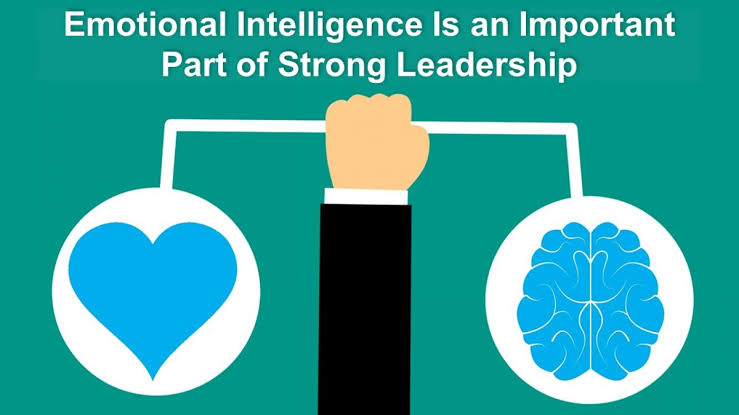
Emotional intelligence is also essential for leaders. A leader sets the tone for the people they lead, and a lack of emotional intelligence can have a ripple effect, leading to poor team engagement and high turnover.
When you master emotional intelligence, you grow personally and you influence every space you’re in positively. It’s a skill that helps you stay grounded in stressful situations like confrontations, changes, or emotional roadblocks. It empowers you to build deeper relationships, perform better at work or school, and achieve your goals with clarity and purpose.
History of Emotional Intelligence.
In the 1930s, psychologist Edward Thorndike explained the concept of “social intelligence” as the ability to get along with other individuals. During the 1940s, psychologist David Wechsler suggested that different practical elements of intelligence could play a critical role in how successful people are in life.
In the 1950s, the school of thought was known as humanistic psychology, and scholars such as Abraham Maslow concentrated attention on how people could build emotional strength.
Another critical concept to arise in the development of emotional intelligence was the concept of multiple intelligences. This idea was put forth in the mid-1970s by Howard Gardner, presenting the idea that intelligence was more than just a single, broad capacity.
Emotional intelligence did not come into our vernacular until around 1990. The term “emotional intelligence” was first utilized in 1985 as it was presented in a doctoral dissertation by Wayne Payne. In 1987, there was an article written by Keith Beasley and published in Mensa Magazine that used the term emotional quotient or EQ.
Then in 1990, psychologists John Mayer and Peter Salovey published their milestone article, Emotional Intelligence, in the journal Imagination, Cognition, and Personality. They described emotional intelligence as the capability to monitor both your own and others’ emotions, discriminate among them, and use this knowledge to guide your thinking and actions.
Salovey and Mayer also initiated a research study to develop accurate measures of emotional intelligence and explore its significance. According to them, emotional intelligence is a complex construct made up of three main abilities:
- Identifying and expressing emotions.
- Regulation of emotions.
- Using emotional information in thinking and activities.
As we interact with people and situations, our emotions shift. So part of being emotionally intelligent is learning how to process emotional information wisely, evaluating what those emotions are telling us and what they mean.
Salovey and Mayer broke this down even further into four components that are being developed and are developing in the course of the ontogenetic process.
1. Identifying emotions:
This is explained as the ability to identify and appropriately express emotions, to distinguish between genuine emotion and imitation.
2. Using emotions to enhance thinking and action:
This includes the ability to use emotions to direct attention to important events, to cause emotions that contribute to problem solving and the generation of creative ideas, to use mood swings as a means of analyzing different points of view on the issue.
3. Understanding emotions:
This is the ability to understand complex emotions and connections between emotions, transitions from one emotion to another, causes of emotions, verbalization of emotions.
4. Managing emotions:
This is the ability to control your emotions, reduce the intensity of negative emotions, and the ability to solve emotionally laden problems without suppressing the associated negative emotions. Promotes personal growth and improvement of interpersonal relationships.
Simple Thoughtful Things Emotionally Intelligent People Do.
#1. Emotional Awareness and Understanding.
Self-awareness is the first step. Emotionally intelligent people know how they feel, why they feel that way, and how their mood might be affecting others. Sadly, studies show that while 95% of people think they’re self-aware, only 10–15% actually are.
Crystallize Your Learning
That means many of us are walking around unaware of how we affect people, even in church, at work, or in our homes.
Proverbs 14:8 says, “The wisdom of the prudent is to give thought to their ways.” That’s self-awareness in action.
Here are some tips to grow self-awareness:
- Ask for constructive feedback from others.
- Keep a journal of your thoughts and feelings.
- Stay open to learning and correction.
#2.Emotional Self-Regulation (Managing Emotions).
Emotional intelligence also entails managing our emotions, especially in difficult situations.
This doesn’t mean pretending you’re okay when you’re not. It means expressing emotions at the right time and in the right way. Like James 1:19 says, “Be quick to listen, slow to speak, and slow to become angry.”
Emotionally intelligent people don’t react; they respond. They take a pause. They breathe. They reflect before replying. And that is wisdom.
Here are ways you can practice self-regulation:
- Look at challenges as growth opportunities.
- Build distress tolerance through prayer, reflection, or wise counsel.
- Accept that you can’t control everything but you can choose your response.
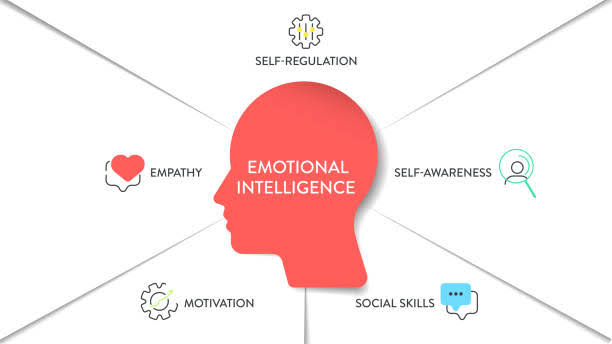
#3. Social Empathy (Perceiving Emotions).
Empathy is very powerful. It means stepping into someone else’s shoes and seeing life through their eyes. Romans 12:15 reminds us, “Rejoice with those who rejoice, and mourn with those who mourn.”
Empathy doesn’t suggest fixing people. It’s about being present with them. Research even shows that empathy is a top skill in great leaders. It drives connection, understanding, and trust.
Here’s how you can grow in empathy:
- Genuinely listen to people without jumping in to fix.
- Put yourself in someone else’s shoes.
- Share your own emotions when it’s safe to do so.Be willing to share emotions.
#4. Social Skills (Using Emotions).
The ability to interact well with others is another vital aspect of emotional intelligence.
Strong emotional intelligence shows in how you speak, how you listen, how you lead. Whether it’s resolving conflict, offering encouragement, or knowing when to stay quiet, emotionally intelligent people use emotional insight to build peace and connection.
Proverbs 16:24 says, “Gracious words are a honeycomb, sweet to the soul and healing to the bones.”
Here are some tips on improving social skills:
- Ask open-ended questions.
- Show genuine interest in others.
- Pay attention to body language.
Real-Life Acts of Emotional Intelligence.
Here are some small but meaningful ways you can operate as an emotionally intelligent person;
- Lend a compassionate ear and listen without interrupting.
- Understand that people’s needs differ. So don’t expect everyone to work, think, or live exactly like you.
- Be patient. Even when others are not at their best, learn to extend grace.
- Remain self-aware by always checking yourself to ensure your behavior aligns with love, peace, and self-control.
- Recognize and respect how others feel. And be open to feedback, whether it’s praise or correction, they listen and grow.
In Summary.
Emotional intelligence involves understanding your feelings and that of others in order to live wisely with people.
And as believers, it’s more than a psychological theory; it’s a spiritual call. To properly work in emotional intelligence, we need to be self aware, compassionate, patient with people, and open to learning.